

Boat trailer safety-chain inspection is easy to postpone because the chains usually hang beneath the tongue, away from the more visible towing hardware. Yet that location exposes them to road abrasion, moisture, and damage that can remain unnoticed until the next hookup. A careful inspection before winter storage leaves time to replace questionable components before the trailer returns to the road.
This guide covers the towing safety chains connecting the trailer to the tow vehicle. They are different from a bow safety chain holding the boat to the trailer, and they do not replace a brake breakaway cable. Some trailers use safety cables instead; follow the cable manufacturer’s inspection and replacement instructions rather than applying chain-link criteria to them.
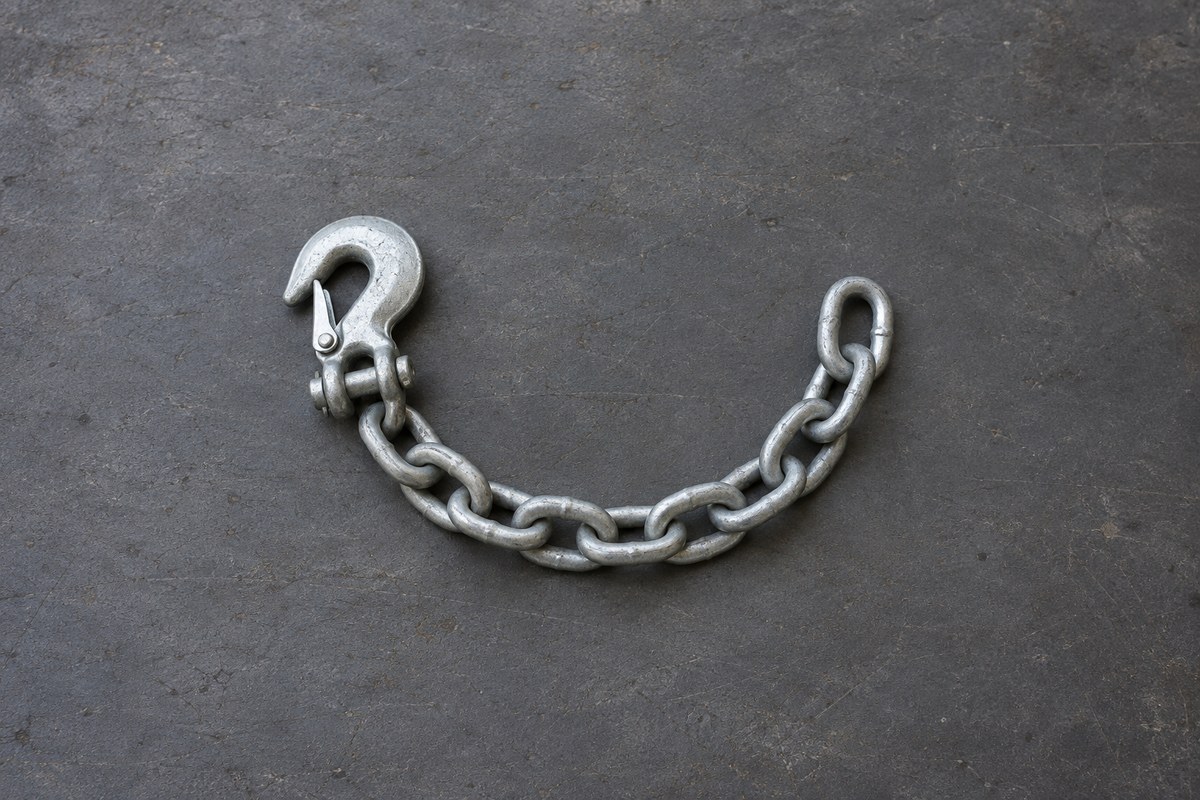
Identify the complete safety-chain connection
Treat each safety chain as an assembly: trailer attachment, links, connecting hardware, hook, and tow-vehicle attachment point. A substantial chain cannot compensate for an unsuitable hook or damaged mounting point.
Find the trailer manual and identify the specified assemblies. Load Rite and EZ Loader both describe crossed safety-chain connections beneath the tongue or coupler. Their instructions also distinguish the towing connection from the other restraints on the rig. Read your own trailer’s arrangement before changing hardware. Load Rite operator’s manual, EZ Loader adjustable-trailer owner’s manual
Park on firm, level ground, secure the vehicle, and chock the trailer wheels. If the trailer is uncoupled, support it using its approved parking arrangement. Inspect from a position that does not require placing any part of your body beneath an unsupported tongue or between components that could move.
Inspect every link, including the areas hidden against its neighbors
Remove loose dirt so the metal is visible, using cleaning methods compatible with the finish. Rotate the loose links as needed to examine contact surfaces. Avoid grinding, aggressive wire-wheel work, or fresh paint that could conceal damage before it has been assessed.
Look for these warning signs:
- Cracked links or damaged weld areas.
- Links that are stretched, twisted, bent, or no longer move normally.
- Flattened sections or deep gouges from dragging on the road.
- Heavy pitting, flaking corrosion, or visible loss of metal.
- Evidence of an improvised splice, welded repair, or unknown replacement link.
Corrosion deserves more than a quick cosmetic judgment: CURT notes that rust can weaken a safety chain. A protective finish helps resist exposure, but its presence does not establish that the assembly remains serviceable. CURT safety-chain and hook guidance
There is no universal owner-applied “acceptable percentage of rust” for every chain. If damage or metal loss is present, stop using the affected assembly until the trailer manufacturer or a qualified service provider determines the correct replacement. Do not straighten, heat, or weld a damaged link back into service.
Check hooks, retainers, and attachment points
Inspect hooks for cracks, distortion, spreading, and worn contact areas. Where a latch is fitted, check that it moves and closes as designed. A latch that sticks, remains open, or fails to retain properly needs attention; a piece of tape is not a repair. Inspect clevis pins and their retainers where present without dismantling an unfamiliar assembly.
At the trailer, look closely at the chain mounting hardware and surrounding structure. At the tow vehicle, inspect the designated safety-chain attachment points for damage and confirm the hooks actually fit. A hook should engage the intended attachment point, not balance on its tip or be forced into an incompatible opening.
Load Rite calls for suitable, properly rated quick links where used and requires them to be fully tightened. EZ Loader directs owners to the manufacturer or dealer for replacement safety chains rather than unauthorized alterations. Those instructions are a useful reason to resolve an uncertain connector before towing. Load Rite manual, EZ Loader manual
Confirm routing and replacement suitability
With the trailer correctly coupled, follow the specified crossed-chain routing and use the designated attachment points. CURT’s hookup guide calls for crossing the chains beneath the coupler and keeping them off the ground. Each chain’s rating must meet the manufacturer’s applicable towing requirements; do not select parts by appearance alone. CURT trailer-hookup guide
The connection must also accommodate the articulation specified for the rig without becoming taut or fouling nearby equipment. Do not improvise a shorter arrangement by knotting links or connecting both chains together. If length or fit is wrong, obtain the correct assembly and routing instructions. Check again when changing the tow vehicle, hitch, or ball-mount arrangement.
For replacements, provide the supplier with the trailer identification and its weight-rating information. Confirm the complete assembly’s specified capacity, length, hook style, and attachment method. Do not assume two unidentified chain ratings can simply be added to establish an acceptable installation. Applicable local requirements and the trailer and hitch manufacturers’ instructions all matter.
Store the chains so the next inspection stays meaningful
Clean and dry the assemblies after the final outing using the manufacturer’s care guidance. Stow them off the ground and away from standing water without putting loads on unrelated wiring or brake components. Do not coat questionable areas to make them look new or use a coating as a substitute for replacement.
A fall inspection does not eliminate the pre-tow check. Before every departure, confirm correct connection, retention, routing, and clearance. Inspect again after any dragging incident or suspected damage rather than waiting for the next seasonal service.
Record safety-chain findings in BoatDuty
Add the inspection to your BoatDuty maintenance routine with the date, trailer identification, assembly markings, and findings for the left and right sides separately. Record approved replacement part numbers, capacity information, hardware used, and any repair performed on an attachment point. Keep uncertain ratings or unresolved damage marked as outstanding, not completed.
Your final checklist should answer five questions:
- Are all links free of visible damage requiring service?
- Are the hooks and any latches or retainers functioning correctly?
- Are both trailer and vehicle attachment points suitable and sound?
- Does the installed arrangement match the manufacturer’s routing and fit requirements?
- Are replacement details and unresolved issues documented?
The benefit is not a polished-looking chain. It is a known, correctly connected assembly with a clear inspection history before the next tow.