

A boat trailer leaf-spring suspension carries a heavy load through wet ramps, road spray, and long periods of parking. A careful fall inspection can expose a broken leaf, loose mounting hardware, or a worn shackle while there is time to arrange a repair. This guide covers trailers equipped with leaf springs; a torsion-axle trailer has different components and should be inspected under its axle and trailer manuals.
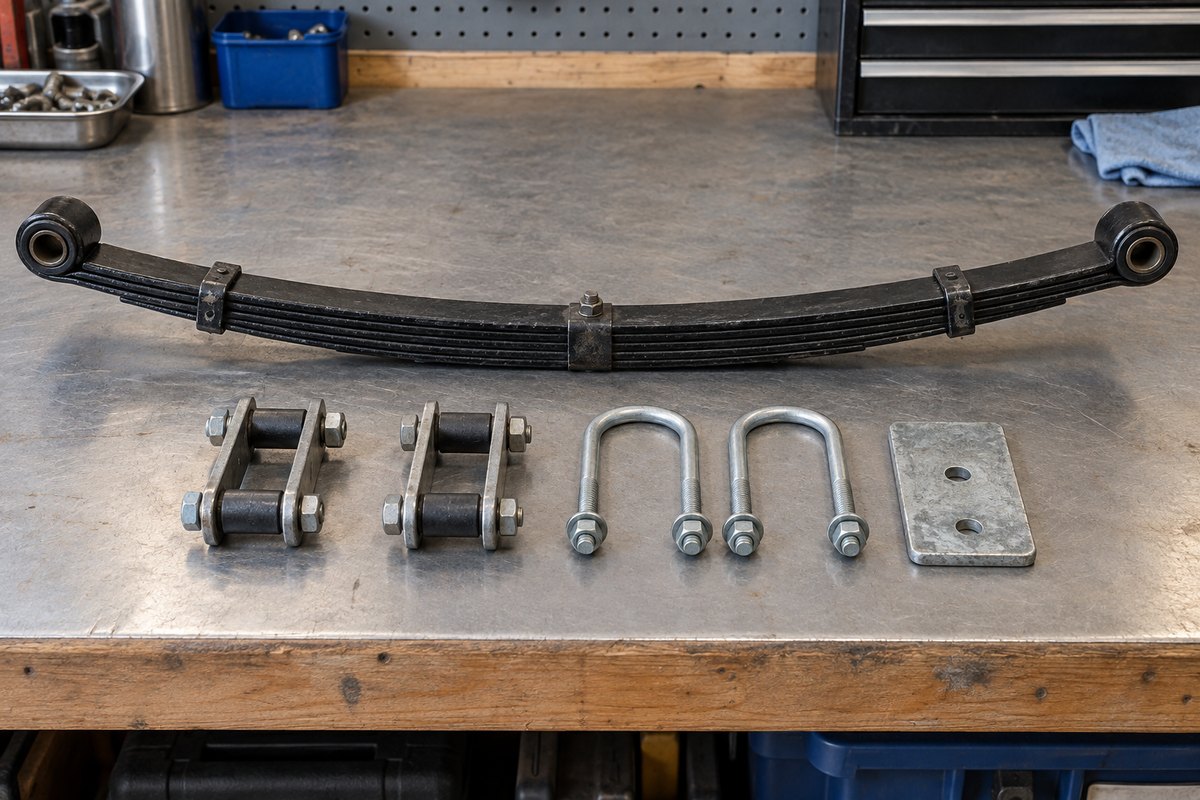
Know which boat trailer suspension parts to inspect
On a typical leaf-spring trailer, a spring pack runs between hangers on the frame and is clamped to its axle with mounting hardware. Depending on the design, the spring ends may use eyes and shackles or a slipper arrangement; a tandem-axle installation may include an equalizer. Do not assume the hardware in a photograph matches your trailer. Load Rite’s parts catalog distinguishes springs, bushings, spring supports, equalizer plates, and leaf-spring/axle mounting kits, illustrating why replacement parts must match the actual assembly.
Start with the trailer’s VIN and owner documentation. Note whether it has one or multiple axles, spring or torsion suspension, and any component identification already recorded. Load Rite’s operator’s manual emphasizes reading the trailer manual and inspecting fasteners regularly for looseness, damage, and excessive corrosion.
Set up a safe, useful visual inspection
Park on firm, level ground, secure the boat and trailer, and chock against unintended movement. Keep the trailer supported as the manufacturer directs. A walk-around does not require lifting it; never crawl beneath a loaded trailer supported only by a jack. If underside access, disassembly, or load-bearing repair is needed, use properly rated equipment and qualified help.
With a light, inspect both sides from the front hanger to the rear support. Look for a leaf that is cracked, separated, badly shifted, or visibly different from its counterpart; compare the spring shape and trailer ride height side to side. Check hangers and frame attachment points for cracked welds, distortion, and severe corrosion. Inspect shackle plates, bolts, bushings, and any equalizer for asymmetrical wear, missing parts, or unusual movement. On a slipper-spring trailer, inspect the slipper end and support instead of looking for a nonexistent rear eye.
Examine the axle-to-spring mounting area for displaced spring packs, bent plates, missing fasteners, and witness marks suggesting movement. Also look for damaged or excessively corroded hardware at the frame. These are screening observations, not a substitute for a manufacturer’s tolerance, torque value, or repair procedure. Do not guess at U-bolt torque or simply tighten a visibly damaged assembly for one more trip.
Treat spring and hardware defects as towing defects
A cracked spring leaf, deformed hanger, loose axle mounting, or markedly worn shackle deserves assessment before towing again. A shop can identify the correct spring type and rating, measure compatible hardware, inspect the related axle and frame, and follow the maker’s installation and torque instructions. Replacing one spring or component without identifying the underlying damage can leave the trailer uneven or unsafe. Avoid welding, heating, drilling, or substituting generic parts in a load-bearing suspension unless the trailer or component manufacturer authorizes that repair.
If the boat and trailer have seen salt water, rinse according to the trailer maker’s instructions and allow the assembly to dry; Load Rite advises a freshwater rinse but warns against putting a trailer away wet. Inspect coating damage and corrosion again after drying. Where lubrication is specified for a particular bushing or bolt, use that component’s directions; some designs differ, so an indiscriminate grease application is not a maintenance plan.
A concise end-of-season suspension checklist
- Confirm the trailer’s spring or torsion configuration and find its manual.
- Chock and secure the trailer; inspect from outside without relying on a jack alone.
- Compare spring packs and ride height on both sides; note cracked or displaced leaves.
- Examine hangers, shackles or slippers, bushings, and any equalizer for damage or wear.
- Inspect axle clamps and other mounting hardware for looseness, movement, and corrosion.
- Arrange model-correct professional repair before towing if any structural or mounting defect is suspected.
Log the inspection date, trailer VIN, the side and axle position of each finding, the parts or specifications confirmed from the manual, and any repair in BoatDuty. Recheck after service and before the next road trip. A dated record helps reveal whether a wear pattern is new, persistent, or linked to a previous repair, without replacing the trailer maker’s maintenance instructions.